AI Text-to-Image Generator
Image
Image
Image

My Role

Generative AI Developer – Model Integration & Pipeline Engineering

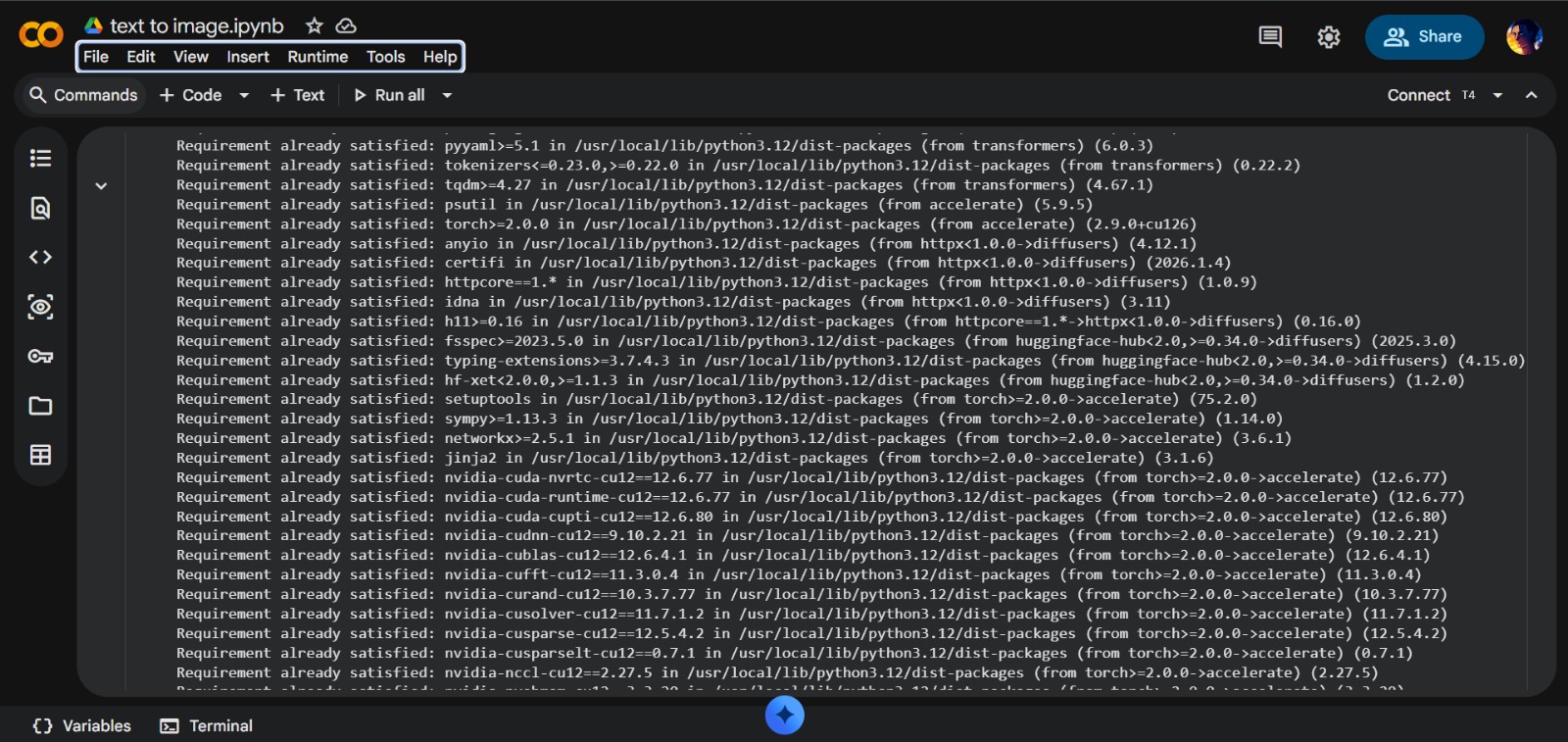
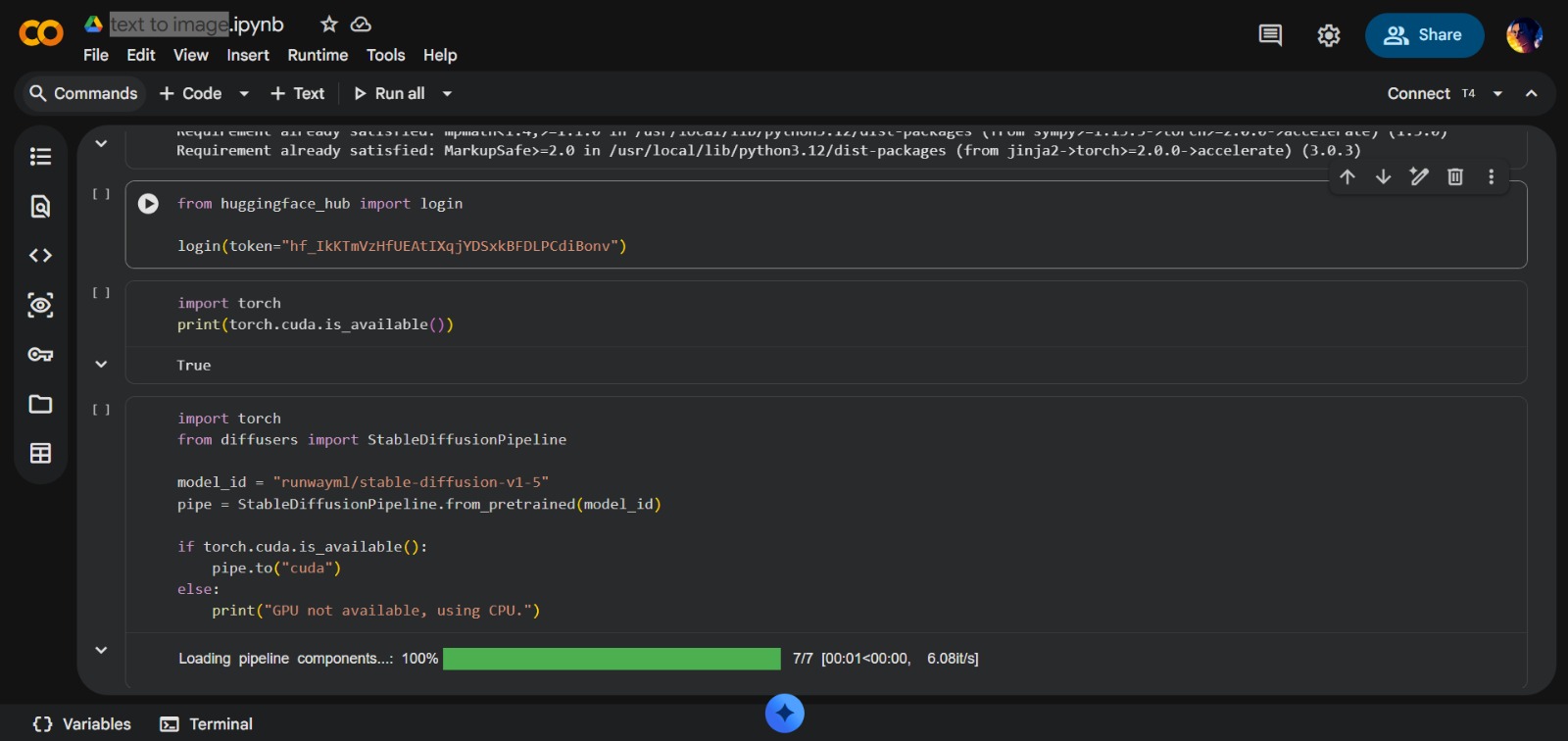
  • Model Ingestion: Implementing StableDiffusionPipeline from RunwayML repository
  • Hardware Acceleration: Configuring NVIDIA CUDA cores for GPU-accelerated generation
  • API Authentication: Managing secure handshakes with Hugging Face Hub
  • Pipeline Optimization: Engineering memory-efficient processing workflows
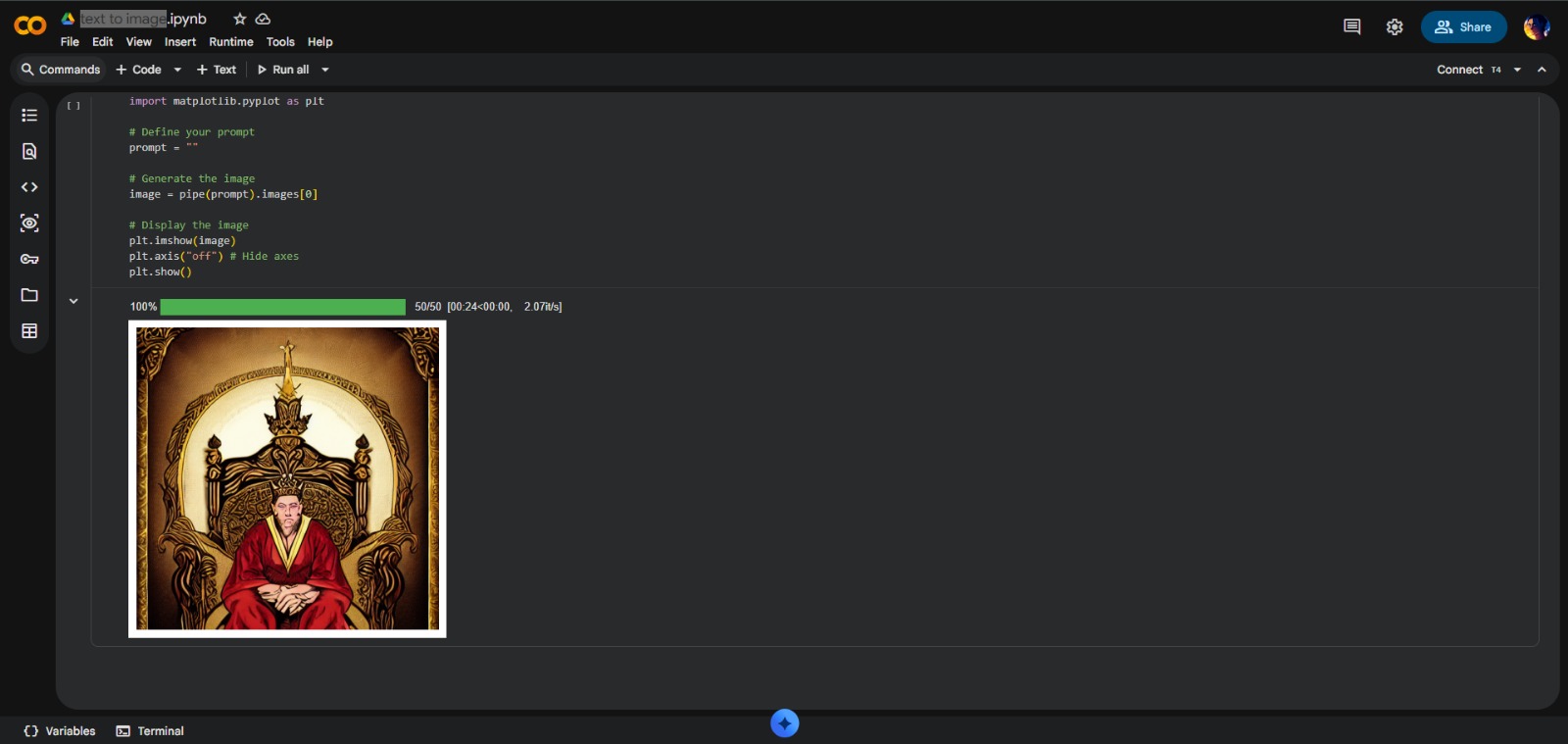
  • Visual Output Orchestration: Rendering generated images directly in development environment

Project Highlights

  • Cutting-Edge Stack: Demonstrates proficiency in Generative AI technologies
  • Cloud-Native Development: Fully optimized for Google Colab with GPU/TPU acceleration
  • Token Security: Implements best practices for API security with private access tokens
  • Zero-Shot Learning: Generates images for concepts never specifically trained on
  • High-Performance: Image generation in seconds rather than minutes

AI Text-to-Image Generator is a sophisticated creative tool that utilizes the Stable Diffusion v1.5 model to synthesize high-fidelity images from natural language descriptions. By bridging the gap between Natural Language Processing (NLP) and Computer Vision, the system translates text prompts into complex visual compositions.
I developed this project to demonstrate the deployment of large-scale pre-trained models from Hugging Face, focusing on GPU-accelerated tensor computing and latent space manipulation for state-of-the-art generative AI applications.

The project implements a comprehensive generative AI pipeline:

  1. Model Integration: Loading Stable Diffusion v1.5 weights from Hugging Face
  2. GPU Optimization: Configuring CUDA acceleration for tensor computations
  3. Text Encoding: Tokenizing natural language prompts into AI-understandable format
  4. Latent Diffusion: Applying noise reduction through diffusion processes
  5. Image Synthesis: Generating high-quality images from latent representations
  6. Rendering Pipeline: Displaying generated images with proper visualization

Technologies Used

  • Python 3 – Primary language for AI orchestration
  • Diffusers (Hugging Face) – Industry-standard diffusion models
  • PyTorch – Deep learning framework for tensor computations
  • Transformers – Tokenizing and encoding textual prompts
  • CUDA (NVIDIA) – High-speed parallel processing
  • Stable Diffusion v1.5 – Core latent diffusion model
  • Hugging Face Hub – Model repository and API access
  • Matplotlib – Image rendering and visualization

Key Features

  • Prompt-to-Pixel Synthesis: Converts text strings to unique images
  • Auto-Detection Hardware Logic: Automatically switches between GPU/CPU
  • Latent Space Exploration: Navigates complex visual concept representations
  • Seamless Library Integration: Combines multiple AI ecosystems
  • Scalable Output: Adjustable sampling steps and guidance scales
  • High-Fidelity Generation: Produces professional-quality visual content
  • Creative Control: Customizable parameters for artistic expression
  • Production-Ready Pipeline: Deployable for various creative applications

Creative Impact

  • Artistic Innovation: Enables creation of unique visual content from text descriptions
  • Design Acceleration: Rapid prototyping for creative projects and visual concepts
  • Content Generation: Supports marketing, storytelling, and educational materials
  • Technical Mastery: Demonstrates advanced skills in state-of-the-art AI technologies
  • Cross-Disciplinary Application: Bridges natural language and visual creativity domains